Article
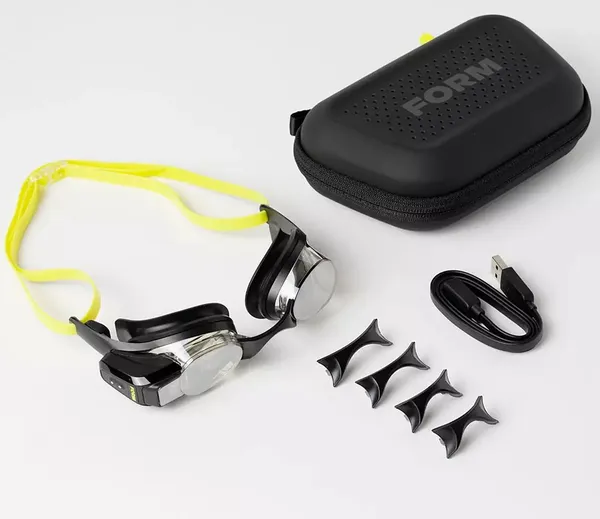
FORM Smart Swim 2 Review: Worth It for Triathletes?
A coach and Ironman finisher's honest review of the FORM Smart Swim 2 goggles. The good, the not-so-good, and whether they're worth $260 for triathletes.
Read ArticleMost triathletes blow up the swim by going out too hard. A coach's guide to triathlon swim pacing: find your race pace, train it, and hold it on race day.
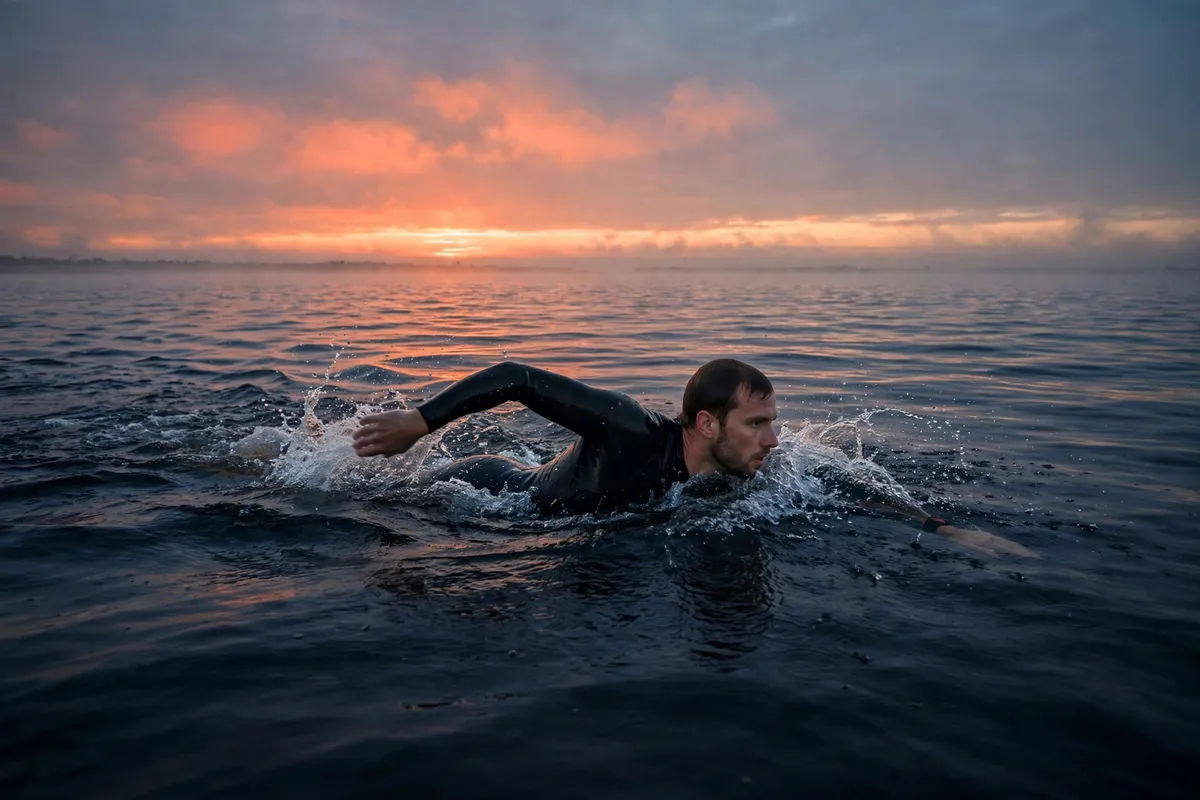
Most triathletes have the same race-day swim story. They dive in full of adrenaline, sprint the first 400 meters, and then spend the rest of the swim just trying not to drown. They exit the water exhausted, and the bike leg starts as damage control instead of a race.
I have watched this happen at every level, from first-timers to experienced age-groupers chasing Kona slots. The problem is almost never fitness. It is pacing. And pacing is a skill you can train.
This guide covers triathlon swim pacing in three steps: find your actual race pace, train it in the pool, and execute it when the gun goes off.
In this guide:
Three things conspire against you at the start of a triathlon swim.
First, adrenaline. You have been waiting months for this. The energy on the beach is electric, the countdown starts, and your body wants to sprint. Holding back feels wrong even though it is right.
Second, the crowd. In a mass or wave start, everyone around you is sprinting. If you settle into your pace while the pack surges ahead, it feels like you are losing the race in the first two minutes. You are not, but it takes discipline to believe that at 6:55 in the morning.
Third, most triathletes have never practiced pacing. They swim their pool sessions at whatever effort feels natural that day. Some days hard, some days easy, no structure. Then they show up on race day and try to execute a pacing strategy they have never rehearsed. That does not work in any sport.
The cost is real. Go out 10 seconds per 100 too fast and you will pay it back double on the back half. Then you pay interest in the form of a ruined bike leg. A well-paced swim feels almost too easy for the first third. That is the feeling you are training for.
You cannot pace what you have not measured. Before you build a triathlon swim pacing strategy, you need a number: your sustainable pace per 100 for your race distance.
The simplest test is a time trial. After a full warmup, swim 1,000 yards (or meters, match your race) at the hardest effort you can sustain evenly. Not a sprint. The fastest pace you could hold without falling apart. Take your total time, divide by 10, and that is your threshold pace per 100.
For a 70.3 (1.2-mile swim), your race pace is roughly that threshold pace plus 3 to 5 seconds per 100. For a full Ironman (2.4 miles), add 5 to 8 seconds. These are starting points. The longer the race, the more conservative the pace, because the swim is the appetizer, not the main course.
Write the number down. Log it in the free swim planner, or tape it to your water bottle if you have to. This is the pace you train, and it is the pace you race. Everything below builds from it.
Knowing your pace and holding your pace are different skills. These sets train the second one. You can build any of them into a full session with the workout builder.
Swim 5 x 100, rest on :20. Each 100 must be faster than the last, but the first one must be controlled, not slow. The discipline is in the early reps. Most swimmers blow rep one and have nowhere to go. Learn to start patient.
Swim 4 x 200 at your goal race pace, rest on :30. The target: every 200 within 3 seconds of the others. Check the clock every 100, or your in-goggle display if you train with FORM Smart Swim 2 goggles.
If you are drifting, you are learning exactly what fading feels like, which is the point. Repeat this set weekly and watch the splits tighten.
Swim your race distance broken into chunks with short rest. For a 70.3, that is 3 x 650, rest on :20. Hold race pace on every chunk. This teaches your body what the full distance feels like at the right effort, without the mental weight of swimming it straight.
Swim 6 x 100 at what you believe is race pace, without looking at the clock until the set is done. Then check. The gap between perceived pace and actual pace is your pacing error. Good pacers close that gap over time. This is the single best drill for developing internal pace feel.
Do one pacing-focused set per week. It does not need to be the whole session. Fifteen to twenty minutes of deliberate pace work beats an hour of mindless yardage. If your pool time is limited, my guide to swim training strategies for busy triathletes shows how to make every session count.
Here is the part most pacing advice skips: your pool pace and your open water pace are not the same number.
In the pool, you get a push off the wall every 25 yards. That is free speed and free rest, and it does not exist on race day. Your open water pace will be 3 to 5 seconds per 100 slower than your pool pace, sometimes more if the water is choppy.
Sighting costs you too. Every time you lift your head to spot a buoy, your hips drop and your stroke shortens. A swimmer who sights every six strokes will swim measurably slower than the same swimmer holding a line. This is trainable. Practice sighting in the pool by lifting your eyes (not your whole head) every six to eight strokes during endurance sets.
Wetsuits change the math in your favor. A good wetsuit lifts your hips and can make you 3 to 5 seconds per 100 faster, which mostly offsets the open water penalty in wetsuit-legal races. If you race in a wetsuit, do at least a few open water sessions in it before race day so you know what your wetsuit pace feels like.
The practical takeaway: take your pool race pace and add a few seconds for open water. That is your non-wetsuit race target. In a wetsuit-legal race, the wetsuit mostly cancels out that penalty, so your target lands close to your pool pace. Write both numbers down. Train to the pool number, race to whichever one fits race day.
All the training in the world does not matter if adrenaline eats your plan in the first 200 meters. Race day is where your triathlon swim pacing gets tested. Here is how to hold it together.
The first 200 meters are a lie. Everyone sprints. Let them. Your job is to swim your pace while the pack burns itself out. You will pass half of them by the first turn buoy. I promise.
Find feet, then settle. Drafting saves real energy, up to 20 percent less effort at the same speed. In the first few minutes, find someone swimming your pace and sit on their feet. Once you are in a rhythm, stop thinking about the crowd and start thinking about your stroke.
Check in every 500 meters. Ask yourself two questions: am I breathing comfortably, and is my stroke long? If breathing is ragged, back off. If your stroke has shortened into a frantic windmill, lengthen it. These checks take two seconds and they keep you honest.
Negative split the swim. Aim to swim the second half slightly faster than the first. This is the opposite of what your instincts want. It is also the fastest way to swim a triathlon leg, and you will exit the water feeling like an athlete instead of a survivor.
Save your legs. Keep the kick light the entire swim. Your legs still have the bike and the run ahead of them, whether that ride is 56 miles or 112. Every kick-driven second you gain in the water costs you minutes later. This is non-negotiable for long course.
A good triathlon swim pace is one you can hold evenly and still exit the water fresh enough to race the bike. It depends on your level and distance. A competitive age-grouper might hold 1:30 per 100 yards for a 70.3. A mid-pack athlete might swim 1:50 to 2:00, and a first-time sprint racer around 2:30.
No, with one exception. A brief 30-second surge to clear the washing machine and find clean water is smart. After that, settle into your race pace immediately. The athletes sprinting past you in the first 400 meters are writing checks their arms cannot cash.
Practice it. Descending 100s and even-split 200s teach you to start patient, so holding back feels normal by race day. In the race itself, repeat a mantra like “easy speed” for the first 500 meters. If the opening feels almost too easy, you are doing it right.
Yes. Drafting is legal and expected in the swim leg of virtually all triathlons. Sit on someone’s feet or at their hip and save up to 20 percent of your energy. Just do not grab, push, or deliberately obstruct anyone, which can get you penalized.
Open water has no walls, so you lose the free speed and rest of every push-off. Add sighting, chop, and navigation, and most triathletes swim 3 to 5 seconds per 100 slower than in the pool. A wetsuit can win most of that back. Train to your pool pace and race to your open water pace.
Triathlon swim pacing is one piece of the puzzle. If you want a full swim plan shaped around your goal race, your schedule, and your current stroke, that is what I do at Break Through Swimming. I coach adult swimmers and triathletes who want a faster, more efficient swim leg. Work with me here.
Join the email list and get the Weekly Swim Structure Planner, plus one useful swim tip every week.
A coach and Ironman finisher's honest review of the FORM Smart Swim 2 goggles. The good, the not-so-good, and whether they're worth $260 for triathletes.
Read Article
Hand paddles build the upper-body swim strength triathletes rely on come race day. A swim coach explains why paddles work and how to train with them safely.
Read Article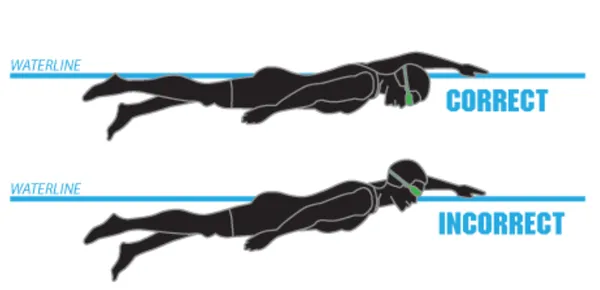
Learn how to swim faster without adding more pool sessions. Focus on body position, catch efficiency, and smarter kick technique to improve your triathlon swim split.
Read ArticleApply for coaching or start with the free swim planner.