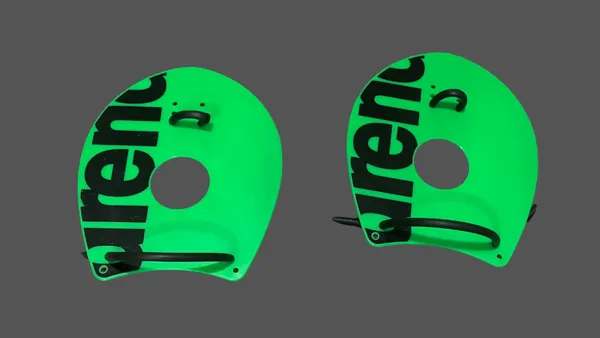
Article
Swim Paddles for Ironman Training: A Coach's Guide
Hand paddles build the upper-body swim strength triathletes rely on come race day. A swim coach explains why paddles work and how to train with them safely.
Read ArticleA coach and Ironman finisher's honest review of the FORM Smart Swim 2 goggles. The good, the not-so-good, and whether they're worth $279 for triathletes.
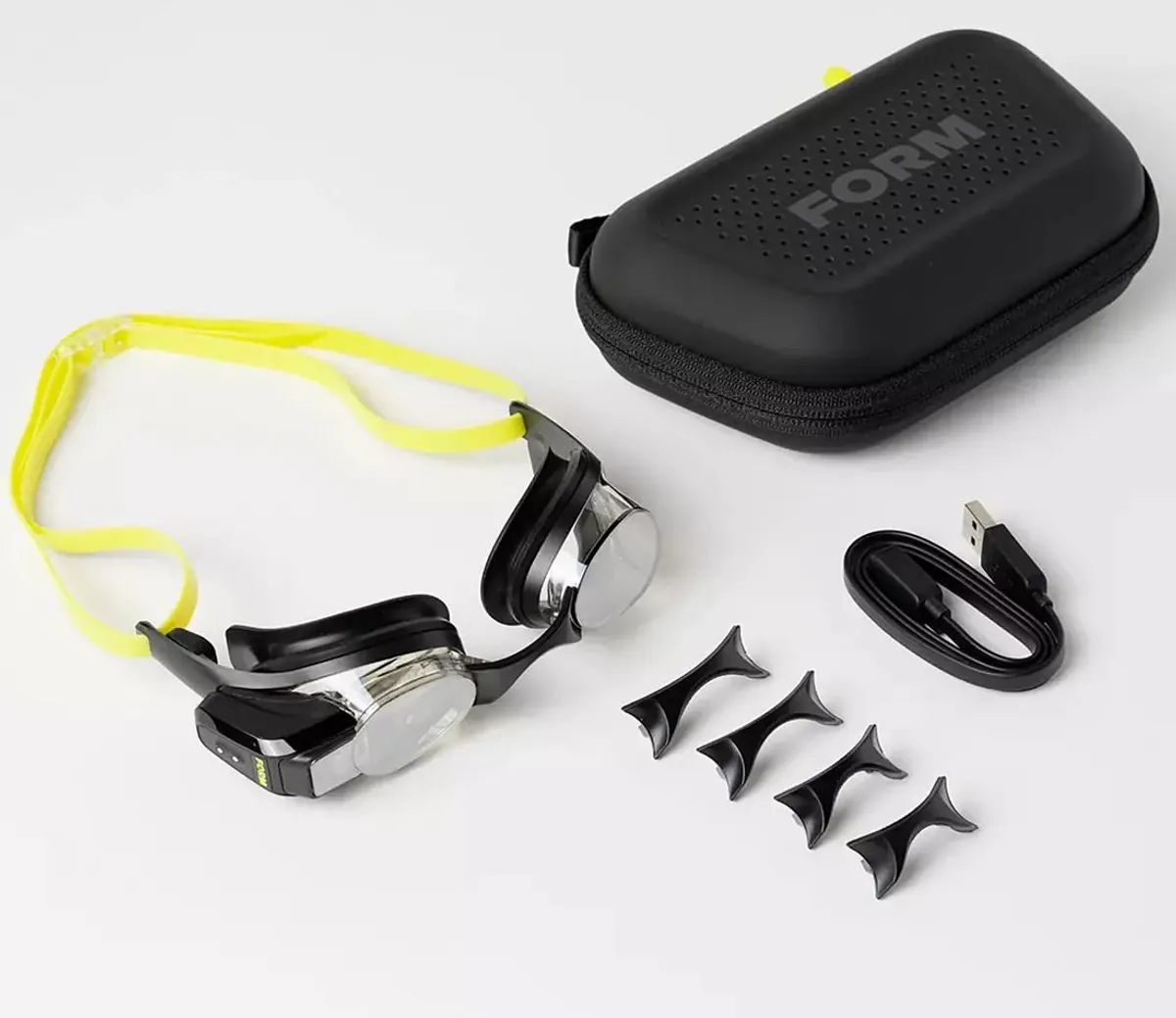
I swam 2.4 miles at Ironman Texas wearing the FORM Smart Swim 2 goggles, and by the end of the swim I was sold on them. Probably not for the reasons most reviews focus on.
If you have been looking at these goggles and trying to decide whether they are worth $279, this review is written from the perspective of someone who actually raced in them, not someone who tested them in a pool for a week. I will tell you which features genuinely changed how I swim, which ones are overhyped, and who should not bother buying them.
Disclosure: As an Amazon Associate I earn from qualifying purchases. Some links below are affiliate links, which means I may earn a small commission at no extra cost to you. I only recommend gear I actually use and coach with.
The FORM Smart Swim 2 is a pair of swim goggles with a tiny transparent screen built into the right lens. While you swim, the screen shows you data without you having to lift your head: pace per 100, distance, stroke rate, heart rate, interval count, and rest time.
That sounds gimmicky on paper. In practice it changes how you swim, because every piece of feedback you used to wait for between intervals is now visible mid-stroke.
The goggles ship with a built-in heart rate sensor on the temple, plus an accelerometer, gyroscope, magnetometer, and barometer. They sync after your swim to the FORM app and also to Garmin Connect, Apple Health, Strava, TrainingPeaks, and TriDot. Base price is $279, and there is an optional premium subscription at $119 per year that unlocks the technique coaching and structured workout library.
Let me skip the marketing list and tell you the three features that actually mattered to me, both in training and on race day.
This is the feature that made the goggles pay for themselves in a single race. SwimStraight is a digital compass inside your goggles. Before you start a section of open water, you sight the buoy, note the bearing on the in-goggle display, and then swim while keeping that number centered.
In a normal open water race, you have to lift your head to sight every six to ten strokes. Every sight breaks your stroke, raises your hips, and costs you energy. At Ironman Texas, I used SwimStraight on the long stretches between turn buoys. I picked up the bearing, put my head down, and swam directly to the number. When I did sight, the buoy was where it was supposed to be. I did not zig-zag, I did not waste energy correcting course, and I came out of the water feeling fresher than I had any right to feel.
For an Ironman swim that is 2.4 miles long, even a small reduction in sighting and zig-zagging adds up to real minutes saved and noticeably less fatigue heading onto the bike.
The other thing that mattered on race day was knowing my pace per 100 while I was swimming. I had a target time for the swim leg, and being able to glance at my pace mid-interval told me whether I was on track or pushing too hard.
In training, this is also the single best feature for fixing pacing problems. Most age-group triathletes either go out too fast and fade, or swim every interval at the same pace regardless of what the set is asking for. Seeing the number live in front of your eyes builds pacing discipline faster than any wall clock ever will.
Swimming has always been the hardest sport to track heart rate in. Chest straps slip, optical wrist sensors are inaccurate in the water, and the usual workaround (a Polar Verity Sense armband) adds another piece of gear to manage. The FORM Smart Swim 2 has an optical heart rate sensor built into the temple, and once you push your cap and hair out of the way, it works. It is not perfect, but it is the most accurate in-water heart rate I have used without a separate strap.
If you train by heart rate zones, this alone is a reason to consider these over a watch.
I am not on the premium subscription, so I will not pretend to give you a verdict on HeadCoach (the in-goggle technique coaching) or the prebuilt workout library. From what I have read and what other coaches have told me, both are solid but probably not necessary if you already have a coach or you write your own workouts. If you are self-coached and you want structure handed to you, the $119 per year can be worth it. If you have a coach or you already plan your own sets, skip it.
The base goggles are $279. That is more than most people have ever spent on goggles, and there is no way to make that price tag feel small. For context, a decent pair of competition goggles is $30, and a Garmin Forerunner that does most of what these do (minus the in-goggle display) is in a similar price range.
The premium subscription is $119 per year. Without it, you still get the goggles, the data, SwimStraight, heart rate, pace, workout tracking, and the third-party app integrations. The subscription unlocks technique coaching, the workout library, and training plans.
My honest take: buy the goggles, skip the subscription unless you are self-coached and actively want a structured plan dropped in your lap.
I owe you the parts most reviews skip.
They are not as hydrodynamic as racing goggles. The sensor housing on the side of the right lens creates a small amount of drag. For training and a long-course race like Ironman, the trade is worth it. If you are racing a sprint and chasing seconds, low-profile racing goggles will be faster.
The temple sensor needs skin contact for heart rate. If you do not push your hair and cap out of the way, the heart rate data will be patchy. This becomes a ten-second habit, but it is a habit you have to build.
The price is real. $279 is a lot for goggles. If you swim twice a week for fitness and you are not training for a race, you do not need these.
The subscription model is annoying. A lot of the features people talk about most (HeadCoach, training plans, workout library) sit behind another paywall on top of the $279 hardware cost. That feels like a lot to ask.
Who they are not for: casual lap swimmers, pool-only fitness swimmers, anyone happy with their current triathlon watch, and anyone on a tight gear budget. If you fit those, save the money.
Who they are for: triathletes training for an open water race, swimmers who want to build real pacing discipline, anyone who struggles to sight in open water, and athletes who already train by heart rate in their other sports and want consistent data in the pool too.
The fairest comparison is to a triathlon watch like a Garmin Forerunner or an Apple Watch Ultra. Both track your swim distance, pace, and stroke count. Both are in the same general price range.
The difference is where the data lives. With a watch, you look at your wrist at the wall and squint at a small screen. With the goggles, the data is in your field of view while you swim. That sounds minor until you have done a hard set with each. The goggles let you focus on swimming. The watch makes you stop and look.
The watch wins on versatility. It tracks all your other sports, it tells time, it shows notifications. The goggles win on the swim itself, and specifically on the open water sighting problem that no watch can solve.
If you are mostly a runner and cyclist who also swims, get the watch. If swimming is a serious focus, especially open water, the goggles do something nothing else does.
Worth pairing: once your pacing is dialed in, the next-best investment for your swim is learning to pull with proper hand position. I cover the gear for that in my coach’s guide to swim paddles for Ironman training.
If you are training for a triathlon with an open water swim, especially anything 70.3 or longer, the FORM Smart Swim 2 is worth the $279. The SwimStraight compass alone changes how an open water swim feels. The in-goggle pace data builds better swimmers in training. The heart rate sensor finally solves the in-water tracking problem that has annoyed coaches and athletes for years.
Skip them if you are a pool-only fitness swimmer or your budget is tight. Save the money for race entry fees and a wetsuit.
If you want help building a swim plan that actually uses the data these goggles give you, book a coaching call with me and we can build something around your schedule and your next race.
For triathletes training for an open water race, yes. The SwimStraight compass and real-time pace data are the two features that pay for themselves on race day, and the temple heart rate sensor solves the long-running problem of accurate in-water heart rate. For pool-only fitness swimmers, the price is hard to justify.
No, not for most triathletes. The base goggles give you the data display, SwimStraight, heart rate, pace, workout tracking, and integrations with Garmin, Apple Health, Strava, TrainingPeaks, and TriDot. The $119 per year subscription unlocks HeadCoach technique coaching, the workout library, and training plans. If you have a coach or you write your own workouts, skip the subscription. If you are self-coached and want structure, it can be worth the cost.
For the swim, yes. For everything else, no. The goggles only track swimming. If you run and bike and need a device for those sports, you still need a watch. Many triathletes wear both and use the goggles specifically for the swim discipline.
In my experience at Ironman Texas, yes. You note the bearing to the next buoy, swim while keeping that bearing centered on the display, and you stay on line. You still need to sight occasionally to confirm, but you sight far less often and you waste much less energy zig-zagging across the course.
Good enough for zone-based training, as long as you push your hair and cap out of the way so the temple sensor sits on bare skin. It is more accurate than a wrist-based optical sensor in the water and easier to deal with than a chest strap or armband. Not lab-grade, but the best in-water solution I have used without a separate strap.
Hand paddles build the upper-body swim strength triathletes rely on come race day. A swim coach explains why paddles work and how to train with them safely.
Read Article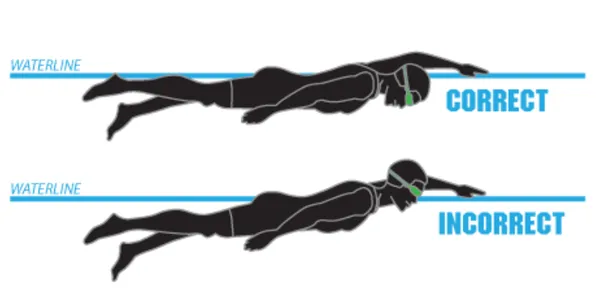
Learn how to swim faster without adding more pool sessions. Focus on body position, catch efficiency, and smarter kick technique to improve your triathlon swim split.
Read ArticleApply for coaching or start with the free swim planner.