Article
FORM Smart Swim 2 Review: Worth It for Triathletes?
A coach and Ironman finisher's honest review of the FORM Smart Swim 2 goggles. The good, the not-so-good, and whether they're worth $279 for triathletes.
Read ArticleHand paddles build the upper-body swim strength triathletes rely on come race day. A swim coach explains why paddles work and how to train with them safely.
Most triathletes treat the swim as the leg they just have to get through. Get to the bike, get to the run, survive the water. But the swim sets the tone for your whole race, and how you train it decides whether you start the bike fresh or already cooked.
One of the simplest tools for building a swim that holds up over 2.4 miles is also one of the most misunderstood: hand paddles. Used well, they build the exact kind of strength an Ironman swim demands. Used carelessly, they are a fast track to a sore shoulder. This guide covers what paddles actually do, why they matter specifically for long-course triathlon, and how to train with them without getting hurt.
Disclosure: As an Amazon Associate I earn from qualifying purchases. Some links below are affiliate links, which means I may earn a small commission at no extra cost to you. I only recommend gear I actually use and coach with.
In this guide:
A hand paddle is a flat plate that straps to your hand and increases the surface area pushing against the water. That single change does two useful things at once.
First, strength. More surface area means more resistance, so every stroke asks more of your lats, shoulders, and upper back. Over a set, that adds up to real strength work you cannot get from swimming alone.
Second, feedback. Because the paddle exaggerates everything your hand does, a sloppy catch or a dropped elbow becomes obvious right away. If your hand slips through the water instead of anchoring it, you feel it instantly. That makes paddles a technique tool as much as a strength tool. A good paddle set leaves you both stronger and more aware of your stroke.
This is the part most training advice skips. Here is the key idea: on race day, you are barely kicking.
In a long-course triathlon you have 112 miles on the bike and a full marathon waiting for you. Burning your legs on the swim to shave a few seconds is a terrible trade. So smart triathletes swim with a quiet, light kick and let the arms and upper body do almost all the work.
The problem is that most pool training does not look like that. We swim with a strong kick, our legs help drive us down the pool, and the upper body carries a lighter load than it will on race day. You can feel fit in training and still find your arms fading halfway through the swim leg.
Paddle work fixes that. When you pull with paddles and let your legs go quiet, you are training the exact system you race on: arms, shoulders, back, and core, carrying the full load. That is not just extra strength work. It is specificity, and specificity is what makes training transfer to race day.
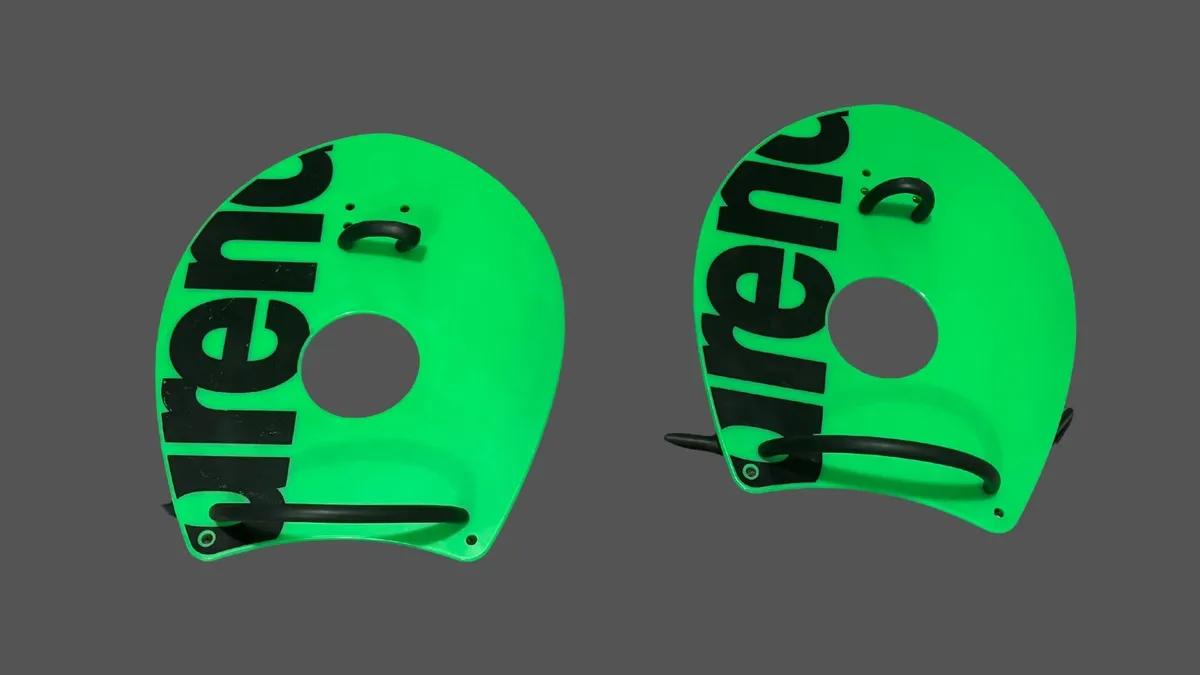
There are dozens of paddles out there, and many are too aggressive for what a triathlete needs. The one I keep coming back to, and the one I point new athletes toward, is the Arena Elite Hand Paddle 2.
A few reasons it works well for triathletes:
It is not oversized. Plenty of paddles are huge slabs built for sprinters chasing maximum overload. The Elite Hand Paddle 2 has a moderate, flat surface that adds meaningful resistance without overloading your shoulder. For triathletes, who care about durability over a long swim rather than raw sprint power, that is the right amount.
It is beginner friendly. The flat design and a large central hole let you feel the water through the paddle, so it helps your technique instead of masking it. A newer triathlete can pick it up without it punishing them.
It fits well and comes in multiple sizes. The strap setup has several positions so you can dial in a secure fit, and the paddle is sold in four sizes. Getting the size right matters, so do not just default to the biggest one.
Honest take: if you are an experienced pool sprinter hunting for maximum resistance, this is not the most aggressive paddle on the market. For a triathlete building a durable, efficient swim, that restraint is a feature, not a flaw. It is a paddle you can train with consistently and not outgrow in a month.
You do not need a complicated plan. You need a little structure.
Keep paddle volume moderate. Early on, aim for paddles on roughly one third of your total swim volume, not all of it. They are a tool inside a session, not the whole session.
Build your race-rehearsal set around them. This is the set that pays off on race day. Pull with paddles, keep your kick very light or switch it off entirely, and hold a steady effort that feels like goal race pace. A simple version: 4 to 6 rounds of 200 yards pulling with paddles at race effort, with short rest. You are practicing exactly what the swim leg will feel like.
Use them to clean up your catch. Shorter efforts with paddles, focused on a high elbow and an early, firm catch, turn them into a technique drill. Because the paddle exaggerates errors, you get instant feedback every stroke.
Watch your stroke count. If your strokes per length climb a lot with paddles on, you are muscling through with poor technique rather than swimming efficiently. Keep the count honest.
Here is where I will be straight with you, because honest gear advice matters more than hype. Paddles are great, but they multiply the load on your shoulder joint, and the shoulder is the most injury-prone joint in swimming. Treat them with a little respect.
Two mistakes cause most paddle-related shoulder pain. The first is using a paddle that is too big, which is why size selection matters and why a moderate paddle is a smart starting point. The second is adding too much paddle volume too quickly. Your muscles adapt to load faster than your tendons and joints do, so ramp up gradually over several weeks rather than diving into long paddle sets right away.
A few simple habits keep you safe. Warm up without paddles before you put them on. Keep your technique tidy, since paddles make a wide, dropped-elbow pull more punishing. And learn the difference between muscle fatigue, which is normal and fine, and joint pain, which is a signal to stop. Sharp or aching pain inside the shoulder is never something to push through.
So my honest answer to “who should use paddles” is this: almost any healthy swimmer can benefit from them, as long as they size up sensibly and build the volume gradually. If you already have a shoulder issue, get it checked before loading it with paddle work.
A pull buoy is the natural partner to paddles. You tuck it between your thighs, it floats your legs up, and it lets you shut the kick off completely so the upper body does all the work. For a pure strength-and-endurance pull set, paddles plus a buoy is a great combination.
That said, you do not strictly need one. There is a real argument for sometimes pulling with paddles and just a light flutter kick and no buoy at all. Without the buoy holding your legs up, you have to keep your body position honest using your core, which is closer to what actually happens in open water. A buoy makes the set more comfortable, no buoy makes it more race-realistic. Both have a place.
If you are buying your first piece of equipment and have to choose, start with the paddles. Add a buoy later when you want longer, more isolated pull sets.
Are swim paddles good for triathlon training? Yes. Paddles build the upper-body strength and endurance that drive a triathlon swim, and pull sets with paddles closely mimic the light-kick swimming you do on race day. They are one of the most useful tools a triathlete can own.
What size swim paddles should a triathlete use? Go moderate, not maximal. A small or medium paddle gives you plenty of strength benefit while keeping shoulder load reasonable. The Arena Elite Hand Paddle 2 comes in four sizes, so match the size to your hand and your experience rather than defaulting to the largest option.
How often should I swim with paddles? For most triathletes, paddle work on one or two swims per week is plenty, covering roughly a third of the session rather than the whole thing. Build up gradually over several weeks.
Can beginner triathletes use paddles? Yes, as long as they start with a moderate-sized paddle and short sets. A flat, feedback-friendly paddle actually helps beginners feel their catch instead of hiding technique flaws.
Do I need a pull buoy to use paddles? No. A pull buoy pairs well with paddles for isolated upper-body sets, but pulling with paddles and a light kick is more race-realistic. Start with paddles and add a buoy later if you want.
Want a swim built around your race? Paddles are a small investment that pays off every time you train. If you want a swim plan shaped around your goal race, your schedule, and your current stroke, that is what I do at Break Through Swimming. I coach adult swimmers and triathletes who want a faster, more efficient swim leg. Work with me here.
A coach and Ironman finisher's honest review of the FORM Smart Swim 2 goggles. The good, the not-so-good, and whether they're worth $279 for triathletes.
Read Article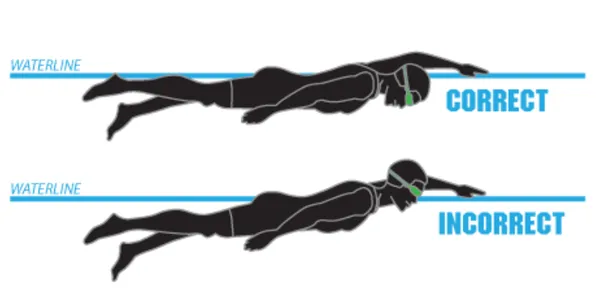
Learn how to swim faster without adding more pool sessions. Focus on body position, catch efficiency, and smarter kick technique to improve your triathlon swim split.
Read ArticleApply for coaching or start with the free swim planner.